
Can Dogs Have Turkey? What’s Safe, What’s Risky and How Much
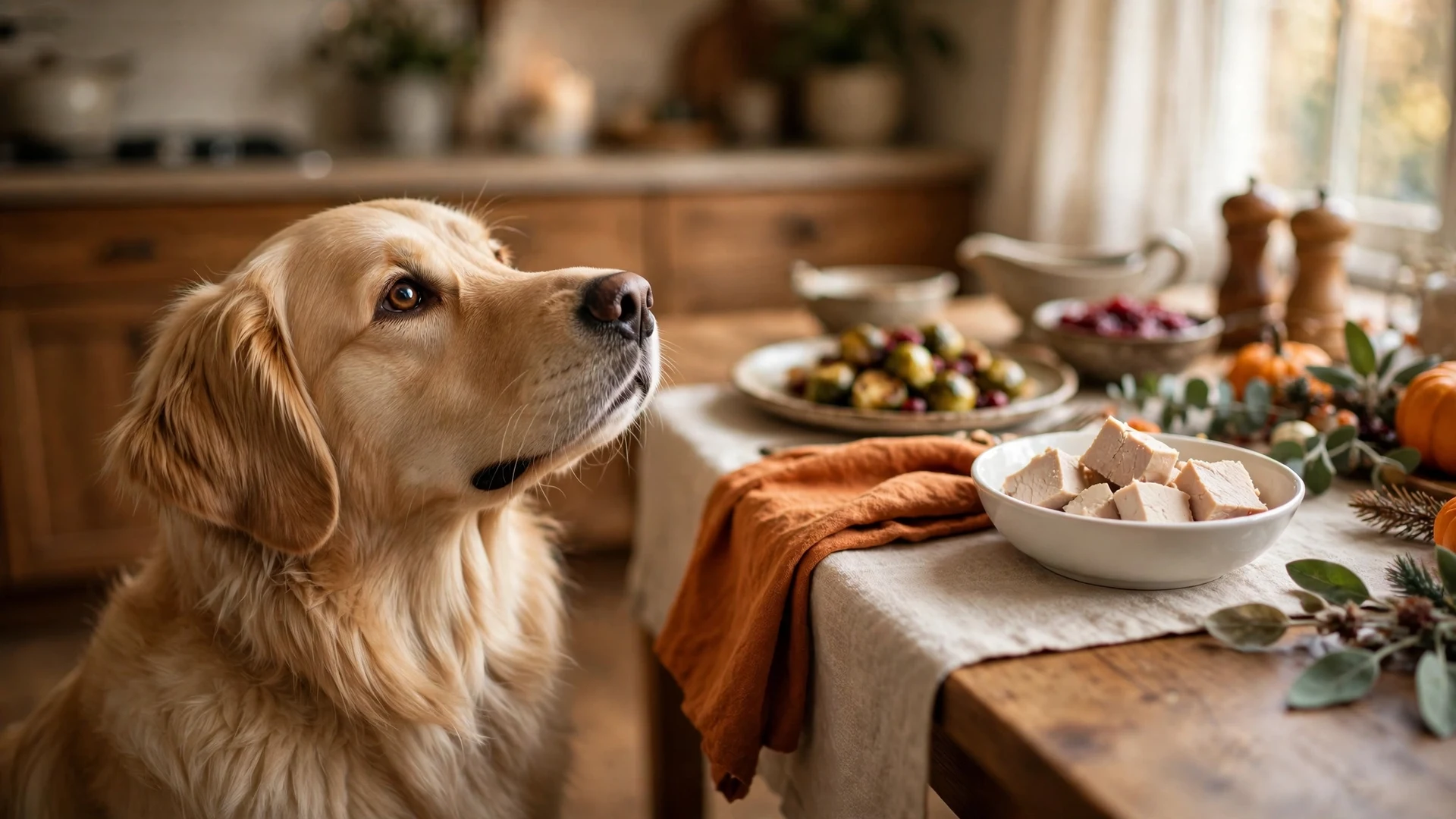
Turkey is a common ingredient in dog food, but that does not mean every kind of turkey on your plate is safe to share. Your dog is staring at the dinner plate, and you want to know if one bite is safe.
The answer to can dogs have turkey is yes, if it is plain, fully cooked, boneless and skinless. Turkey itself is not toxic. The risks are the seasoning, skin, gravy, stuffing and bones. Cut it into bite-size pieces and keep the portion small, because turkey is an extra, not a meal.
Can Dogs Have Turkey? How to Serve It Safely
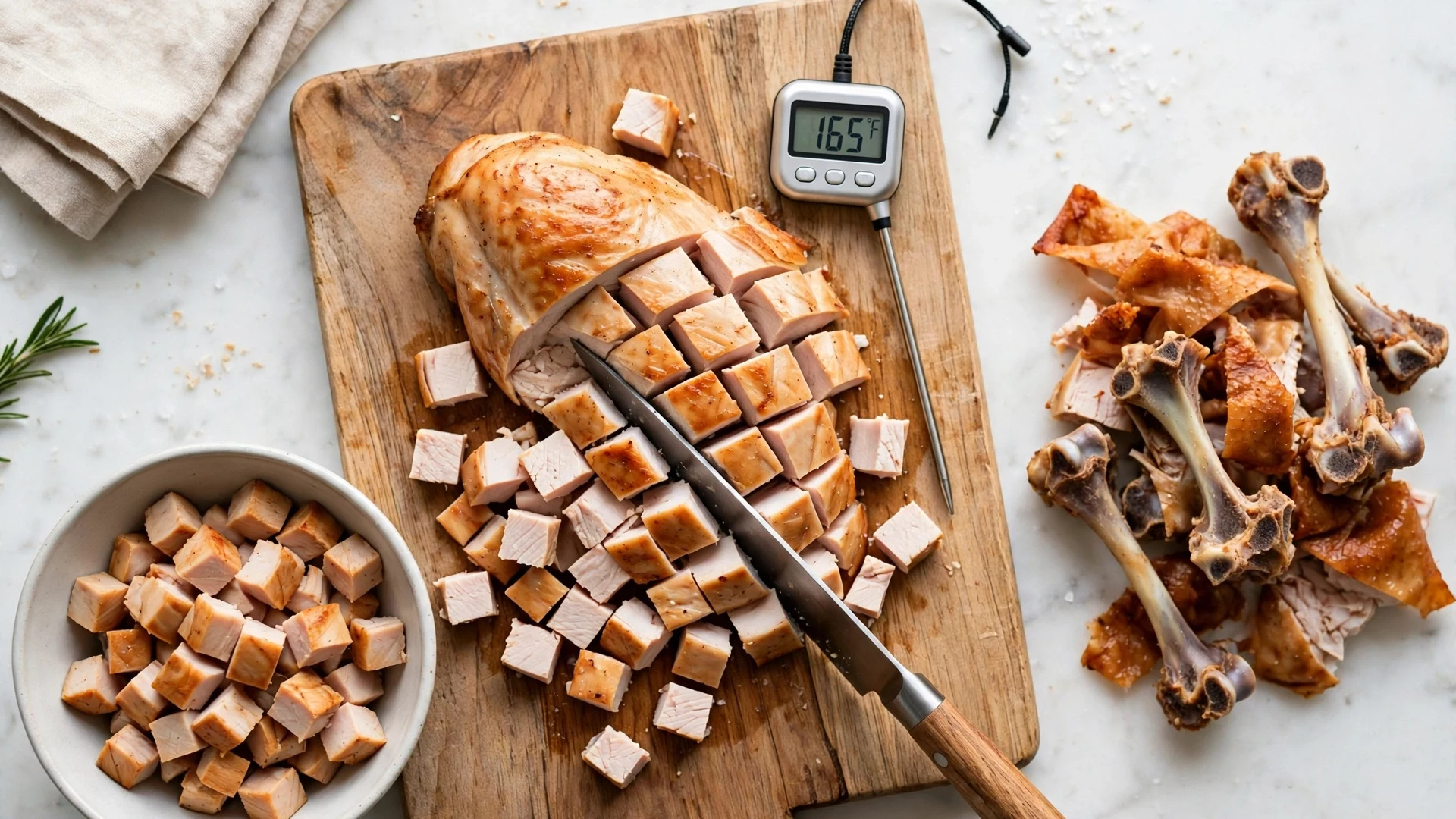
Dogs can eat turkey meat, and white breast meat is the safest pick. The meat must be plain, and raw turkey should be cooked to 165°F, the USDA minimum for all poultry, with the skin, bones and visible fat removed. Seasoned holiday turkey is the real problem, because it often carries garlic, onion, butter and salt.
Here is the process we recommend for a dog-safe portion:
- Set aside a plain slice before you season the family’s turkey.
- Cook it until the thickest part reaches 165°F, checking with a food thermometer. For ground turkey, check the center of the meat or patty.
- Remove the skin, bones and visible fat.
- Let it cool, then cut it into small pieces.
Never tried turkey before? Start with one small piece and watch for itching, vomiting or loose stools over the next day. PetMD notes that a turkey allergy is rare, but it happens.
Is Turkey Good for Dogs?
Is turkey safe for dogs? Yes, in small amounts, for most healthy dogs. Plain roasted turkey breast is lean protein with B vitamins, zinc, selenium and phosphorus. It is still an extra. A dog food labeled complete and balanced for the appropriate life stage is formulated to provide the nutrients dogs need. Plain turkey is not a complete and balanced diet and should only be an occasional extra.
White meat and dark meat are not the same. USDA FoodData Central lists roasted turkey breast meat at about 136 calories and 2 grams of fat per 100 grams. Roasted drumstick meat is about 173 calories and 6.5 grams of fat. A veterinarian quoted by Rover recommends lean white meat for dogs prone to obesity or pancreatitis.
Chicken works too. Turkey and chicken can both be lean protein choices. Which is lower in fat and calories depends on the cut and whether the skin is included.
Is Turkey Bad for Dogs?
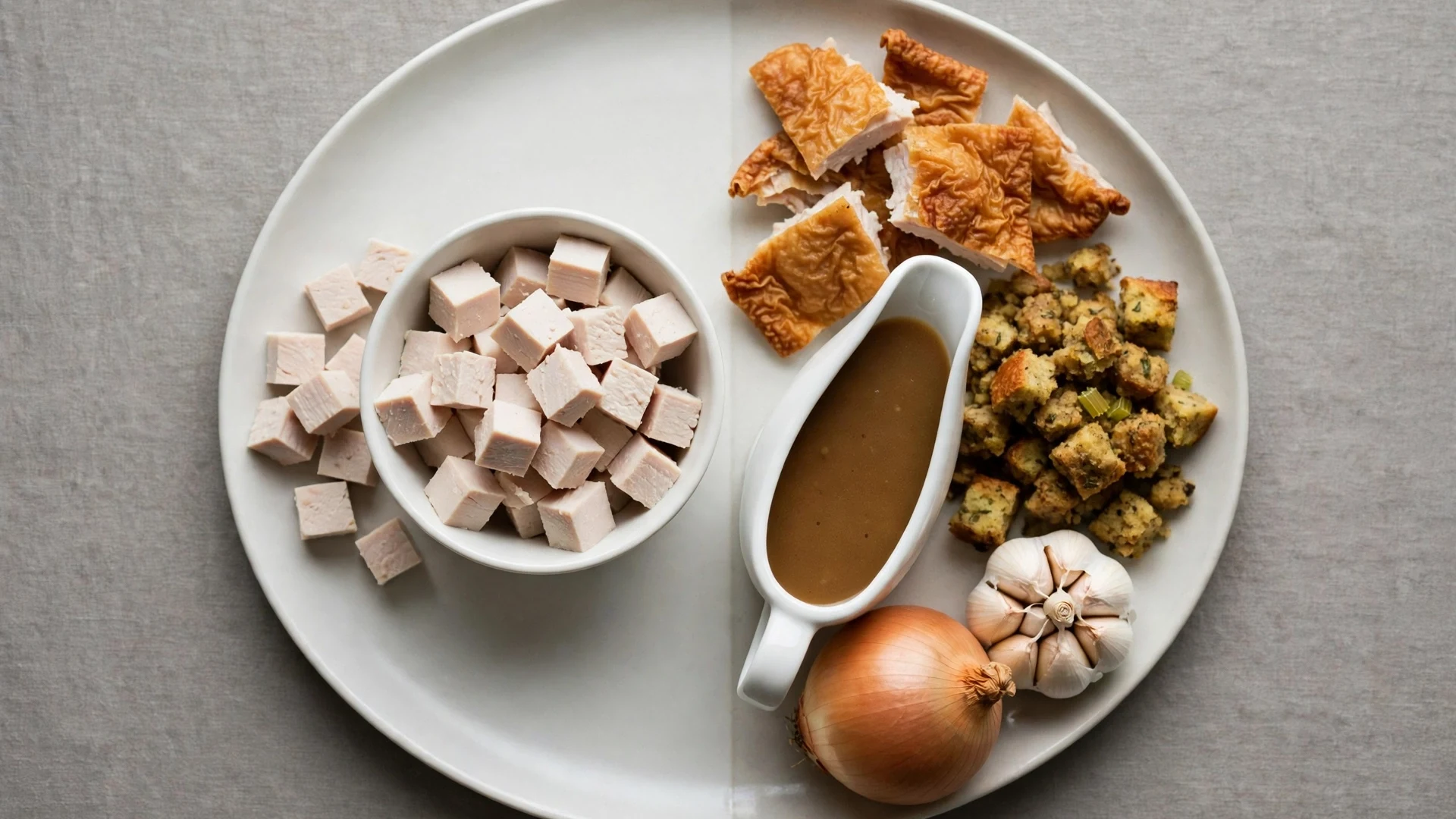
No, plain turkey is not bad for dogs. The trouble comes from what is added or left on. Garlic and onion damage red blood cells, according to the ASPCA. Fatty skin and drippings can cause digestive upset and may contribute to pancreatitis risk, particularly in dogs with a history of the condition. Raw or undercooked turkey can carry bacteria. Bones cause choking and gut injuries.
| What’s on the plate | Safe? | Why |
|---|---|---|
| Plain breast meat | Yes, small amounts | Lean protein |
| Plain dark meat | Small amounts | More fat |
| Turkey skin and fatty drippings | Avoid | High in fat; may cause digestive upset and increase pancreatitis risk, especially in susceptible dogs |
| Turkey with onion, garlic or rich seasoning | No | Garlic, onion, salt, butter |
| Raw or undercooked turkey | No | Salmonella and other bacteria |
| Processed turkey products | No | Salt, preservatives, fat |
| Turkey bones | No | Choking, blockage, injury |
Pancreatitis is inflammation of the pancreas. The Merck Veterinary Manual lists dietary indiscretion, meaning eating food outside the normal diet, as a common risk factor in dogs. Signs include vomiting and belly pain. PetMD notes that processed turkey can contain excess salt, preservatives and fat. Improperly handled or stored processed turkey may also pose a Listeria risk.
Can Dogs Eat Turkey Bones?
No. Cooked turkey bones splinter, and the shards can cause choking, mouth and throat cuts, or blockages in the gut. Bones are the one form where the answer to can dogs have turkey is always no. Raw bones are not a safe swap, because they can still cause injury and carry bacteria. Keep the carcass, legs, wings and neck bones away from your dog.
The ASPCA warns that bones can injure or block a dog’s gut and may need surgery. Hill’s Pet Nutrition adds that signs can show up days later: straining to poop, bloody stool, vomiting or a swollen belly. Seal the carcass in a trash can your dog cannot open.
Can Dogs Eat Ground Turkey?
Yes, if it is plain, lean and fully cooked. It is also the easiest form to portion when owners ask can dogs have turkey in small amounts. The USDA sets 165°F as the safe minimum for ground poultry, so use a thermometer. Some ground turkey is seasoned or mixed with additives such as salt, garlic or onion, so read the label. Skip turkey burgers made for people.
Bethany Hsia, DVM, told Chewy that lean, thoroughly cooked ground turkey has the same vitamins and minerals as regular turkey meat. Brown it in a dry pan, drain the fat, and let it cool before you stir a spoonful into regular food.
How Much Turkey Can a Dog Eat?
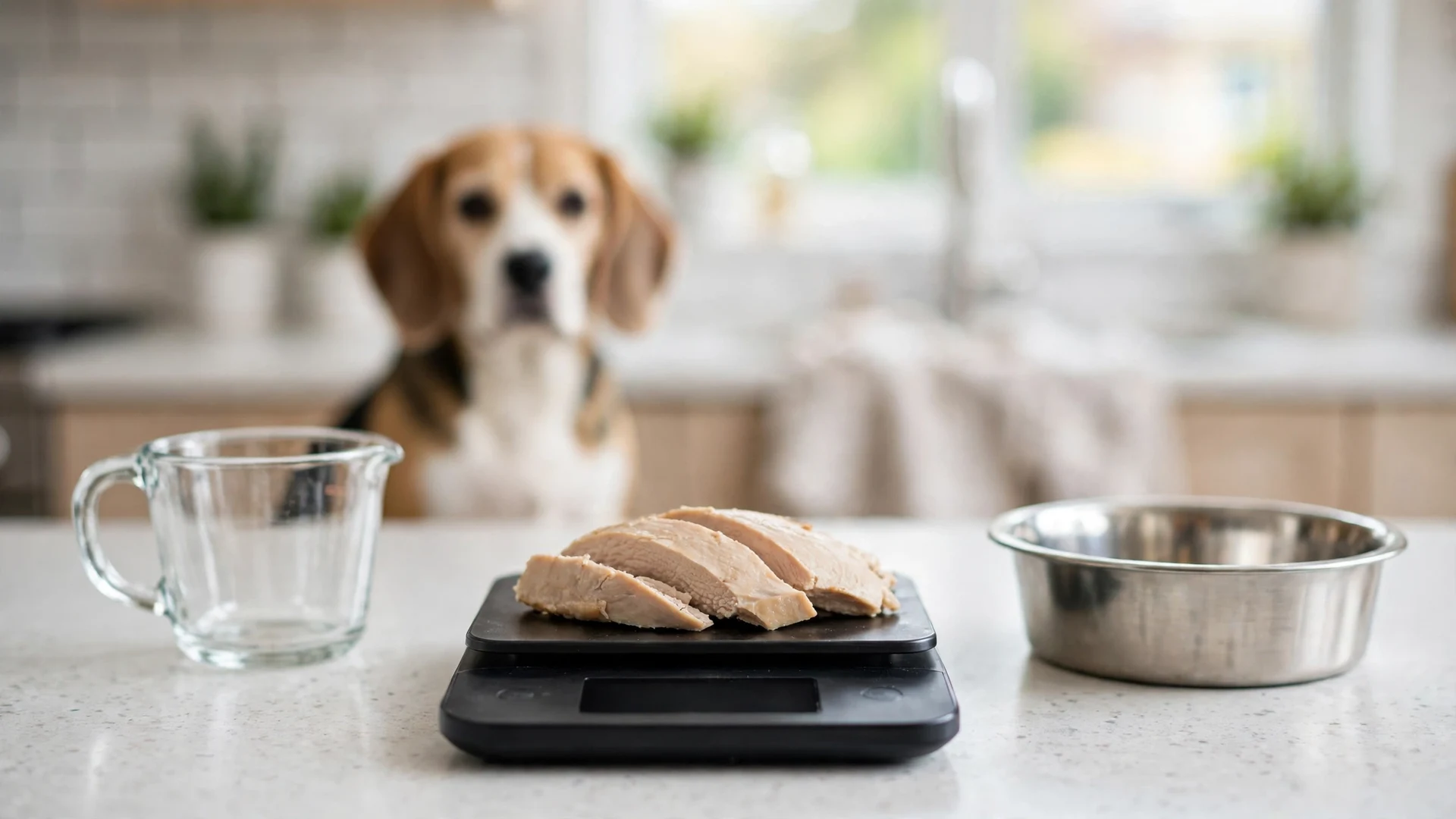
Treats and extras, including table scraps, should be no more than 10% of your dog’s daily calories, says the AKC. For a 50-pound dog, the calculation gives an upper limit of roughly 3 ounces of this turkey breast, but that is not a target serving. A smaller amount is more appropriate for an occasional treat. Smaller dogs get much less. The 10% rule is a general treat guideline, not a guarantee that a particular food or portion is suitable for every dog. Dogs with medical conditions or special diets may need a stricter limit. These figures are calorie-based estimates, not recommended turkey servings. Your dog’s actual treat allowance depends on age, activity, body condition, health and the calories in its regular food.
| Dog weight | Daily calories* | 10% treat budget | Approx. turkey breast amount (oz) at 10% limit |
|---|---|---|---|
| 10 lb | about 350 | 35 | 0.9 oz |
| 25 lb | about 690 | 69 | 1.8 oz |
| 50 lb | about 1,165 | 116 | 3 oz |
| 75 lb | about 1,580 | 158 | 4 oz |
| 100 lb | about 1,960 | 196 | 5 oz |
*Estimate for a healthy-weight, neutered adult, using the PetMD method: resting energy of 70 times body weight in kilograms to the 0.75 power, multiplied by 1.6. Turkey breast is counted at about 39 calories per ounce. Every other treat uses the same budget.
These are ceilings, not targets: the table shows the theoretical 10% allowance, while PetMD’s vet-reviewed chart, at about 2 ounces a day for dogs from 21 to 50 pounds, is the more conservative practical guide. Ask your vet first if your dog is a puppy, is overweight, has had pancreatitis, has kidney disease or eats a prescription diet.
When to Call a Vet After Your Dog Eats Turkey
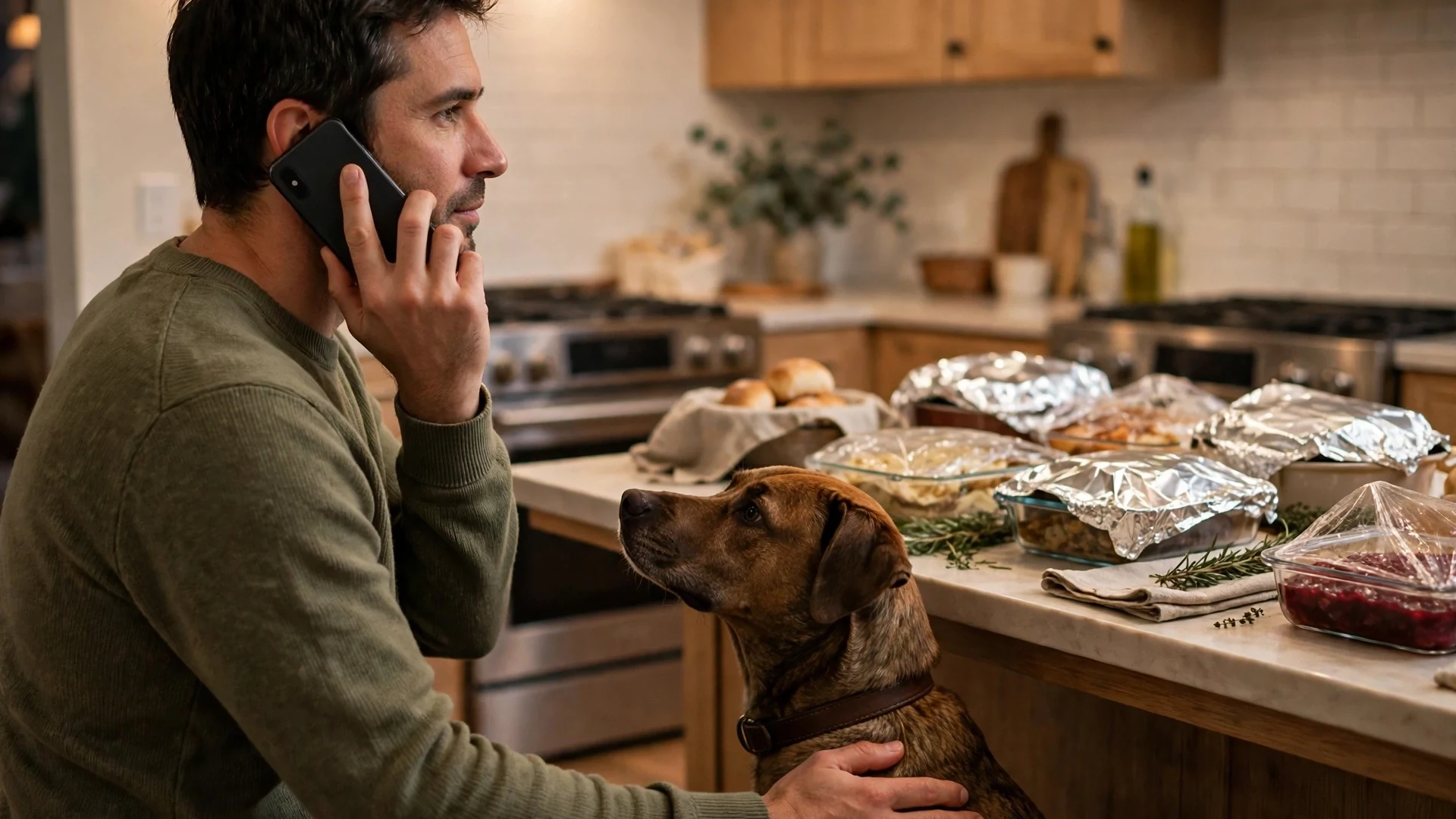
Contact your veterinarian promptly if your dog swallows a turkey bone or eats turkey containing onion or garlic. Seek emergency veterinary care for repeated vomiting, significant abdominal pain, severe weakness, collapse or other serious symptoms. If your vet is closed, call an emergency clinic or a poison helpline.
| What your dog ate | What to do |
|---|---|
| A small amount of plain, cooked turkey | Monitor for digestive upset. Contact your vet if vomiting, diarrhea or unusual tiredness develops or persists. Seek urgent care for repeated vomiting, significant abdominal pain, severe weakness or collapse. |
| Skin, fat or drippings | Watch closely, especially after a large amount or if your dog has had pancreatitis before. Call your vet for vomiting, belly pain or no appetite. |
| Turkey with garlic or onion | Call your vet or a poison helpline now. |
| Any bone | Call your vet now, even if your dog seems fine. |
| Raw or spoiled turkey | Call your vet if vomiting or diarrhea starts. Wash hands, bowls and counters. |
No home treatment replaces a vet visit. Do not make your dog vomit unless a vet tells you to. Pet Poison Helpline is (855) 764-7661, and ASPCA Animal Poison Control is (888) 426-4435. Both are open around the clock, and a consultation fee may apply.
The Bottom Line on Dogs and Turkey
So, can dogs have turkey? Yes, in its safe form: plain, fully cooked, boneless and skinless, in a small portion. Leave out the seasoning, skin, gravy and bones, and keep all treats and extras within your dog’s appropriate daily calorie allowance; the commonly used 10% guideline is an upper limit, not a target. If your dog swallows a bone or eats seasoned turkey, call a vet right away.
Frequently Asked Questions
Can dogs eat turkey skin?
No. Turkey skin is high in fat and is often coated with butter, oil or seasoning, which raises the risk of stomach upset and may increase the risk of pancreatitis, according to the AKC. Trim it off before you share any turkey, and keep fatty drippings away from your dog too.
Can dogs eat raw turkey?
No. The AVMA discourages feeding raw or undercooked meat and poultry to dogs because it can carry Salmonella and Campylobacter, which can sicken dogs and the people who handle the food. Raw poultry can also expose people handling it to harmful bacteria, and dogs that appear healthy may still carry and spread some pathogens. Cook turkey to 165°F first.
Can dogs eat turkey necks?
Veterinary advice on turkey necks is not consistent. Some sources discuss feeding turkey necks prepared in particular ways, but necks contain bones and the risks include choking and digestive tract injury. Raw necks also carry foodborne-bacteria risks. Because safer boneless options are available, the simplest recommendation is to skip turkey necks.
Can dogs eat turkey lunch meat?
No. Lunch meat is high in salt and preservatives, and it may contain seasonings with garlic or onion. PetMD advises against processed turkey for dogs. If your dog ate some, check the label for garlic or onion powder and call your vet if you find either.
Is it safe that I fed my three dogs turkey today?
Check what each dog ate and how much, and each dog’s size and health. A small amount of plain, cooked, boneless meat can usually be watched at home: watch each dog for vomiting, diarrhea or low energy over the next day. Contact your vet promptly about bones, onion or garlic, and seek emergency care if a dog develops serious symptoms such as repeated vomiting, severe weakness or collapse.
Can puppies eat turkey?
Yes, in tiny amounts, if it is plain, fully cooked, boneless and skinless. A puppy’s main food should be a complete puppy food, and turkey is only an occasional extra. Start with one small piece, watch for stomach upset, and ask your vet first if your puppy is very young or has a sensitive stomach.
Can dogs eat Thanksgiving turkey?
Only a plain piece set aside before the bird is seasoned or brined. The turkey on the holiday table may be brined, buttered or seasoned with salt, garlic or onion, and it is often served with gravy and stuffing. Do not assume a slice from the platter is plain enough for your dog. Never give your dog the carcass or bones.
Can dogs eat turkey bacon or turkey sausage?
No. Both are processed meats with a lot of salt and fat, and many brands add garlic or onion powder and other seasonings. They are made for people, not dogs, so skip them even as a small treat.
Can dogs eat smoked turkey?
No, it is best to skip it. Smoked turkey is usually brined or seasoned, which makes it high in salt, and it is often sold on the bone. A plain, unseasoned piece of regular cooked turkey is a safer choice.
Can dogs eat turkey giblets?
Yes, if they are plain and fully cooked. The heart, liver and gizzard are organ meats: rich and nutritious in small amounts, but they can upset a stomach that is not used to them, so offer only a small piece. Skip giblets cooked in gravy or stuffing, and remember the neck in the giblet bag is a bone, not a treat.
Can dogs have turkey every day?
Only within the treat budget. Turkey counts toward the same 10% daily calorie allowance as every other extra, and a complete dog food already covers daily nutrition. For most dogs, plain turkey works better as an occasional extra than a daily habit.
Sources
- USDA Food Safety and Inspection Service, Safe Minimum Internal Temperature Chart
- AVMA, Raw diets for dogs and cats
- ASPCA, People Foods to Avoid Feeding Your Pets
- Merck Veterinary Manual, Pancreatitis in Dogs and Cats
- AKC, How Many Treats Can Your Dog Have and Can Dogs Eat Thanksgiving Dinner
- PetMD, Can Dogs Eat Turkey and How Many Calories Does a Dog Need
- Hill’s Pet Nutrition, Can Dogs Eat Turkey
- Rover: turkey for dogs, veterinarian guidance on lean white meat
- GoodRx: turkey and chicken for dogs, veterinarian interviews
- Chewy: can dogs eat turkey (Bethany Hsia, DVM)
- Dial A Vet: what parts of a turkey can I feed my dog
- USDA FoodData Central: roasted turkey breast meat (FDC 174516) and roasted turkey drumstick meat, per 100 g of edible meat
- Pet Poison Helpline: poison control (855) 764-7661